
Why drinking water does not lower your blood alcohol
Water does not clear alcohol from the body any faster. Liver enzymes, the dilution arithmetic and what the 2024–2026 studies actually found — explained simply.
August 10, 2026 · 3 min read
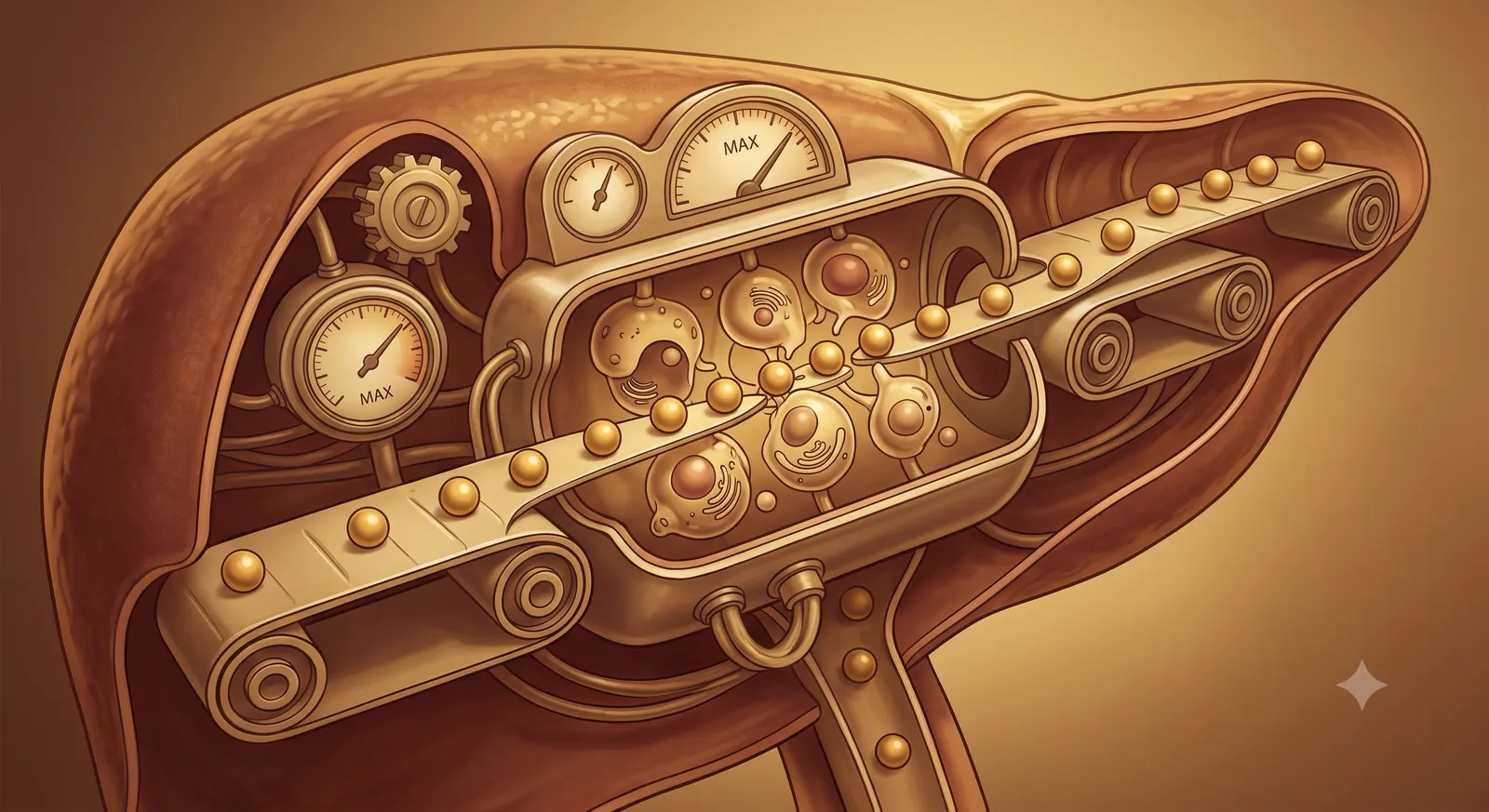
The liver is already running at full capacity
Between 92% and 98% of the ethanol that enters the body is broken down in the liver by oxidative metabolism. Alcohol dehydrogenase (ADH) and supporting enzyme systems do that work. Here is the crucial point: within the normal drinking range that enzyme is already saturated. The liver is running at maximum capacity, and that capacity is fixed — roughly 7–10 grams of pure ethanol an hour, which translates into a fall of roughly 0.10–0.35‰ an hour in the blood. Drinking water does not make the enzyme work faster, and it does not meaningfully change blood flow through the liver.
That leaves two mechanisms: dilution and excretion. Neither one works.
Dilution: an effect of about 1%
Total body water in an adult is around 40–45 litres. Adding 500 mL of water to that produces a dilution effect of about 1%. It takes a reading of 1.00‰ down to 0.99 — too small to measure, too small to feel, too small to change anything. And the effect is temporary: the kidneys clear the excess water within a few hours, while the mass of alcohol stays exactly where it was.
Excretion: urine plays a very small part
Only 2–10% of alcohol leaves the body unchanged through breath, sweat and urine, and urine accounts for just a few percent of that. However much water you drink, that share does not rise appreciably. Alcohol is water-soluble, but the kidneys do not simply filter it out along with the water — most of it is reabsorbed.
What about the hangover?
For many years the assumption held that “hangovers are caused by dehydration, so water will fix them”. A comprehensive 2024 review tested that assumption and rejected it: drinking water while drinking alcohol, or afterwards, had only a very limited effect on the next day, and no relationship was found between the amount of water drunk during a hangover and the severity of the symptoms. The conclusion: dehydration and hangover are two consequences of alcohol that appear at the same time but are independent of each other.
A randomised crossover clinical trial published in June 2026 confirmed this under controlled conditions. In two separate sessions, participants drank the same amount of alcohol, once with no water and once with 15 mL of water per kilogram of body weight. The breath ethanol and acetaldehyde curves were the same in both conditions; the psychomotor test scores were the same; and there was no difference in next-morning headache, nausea, concentration or sleepiness scores either. (The study has its limits: a small sample of 13, male participants only, and funding from a sake producer — but its finding points the same way as the 2024 review.)
So what is water actually good for?
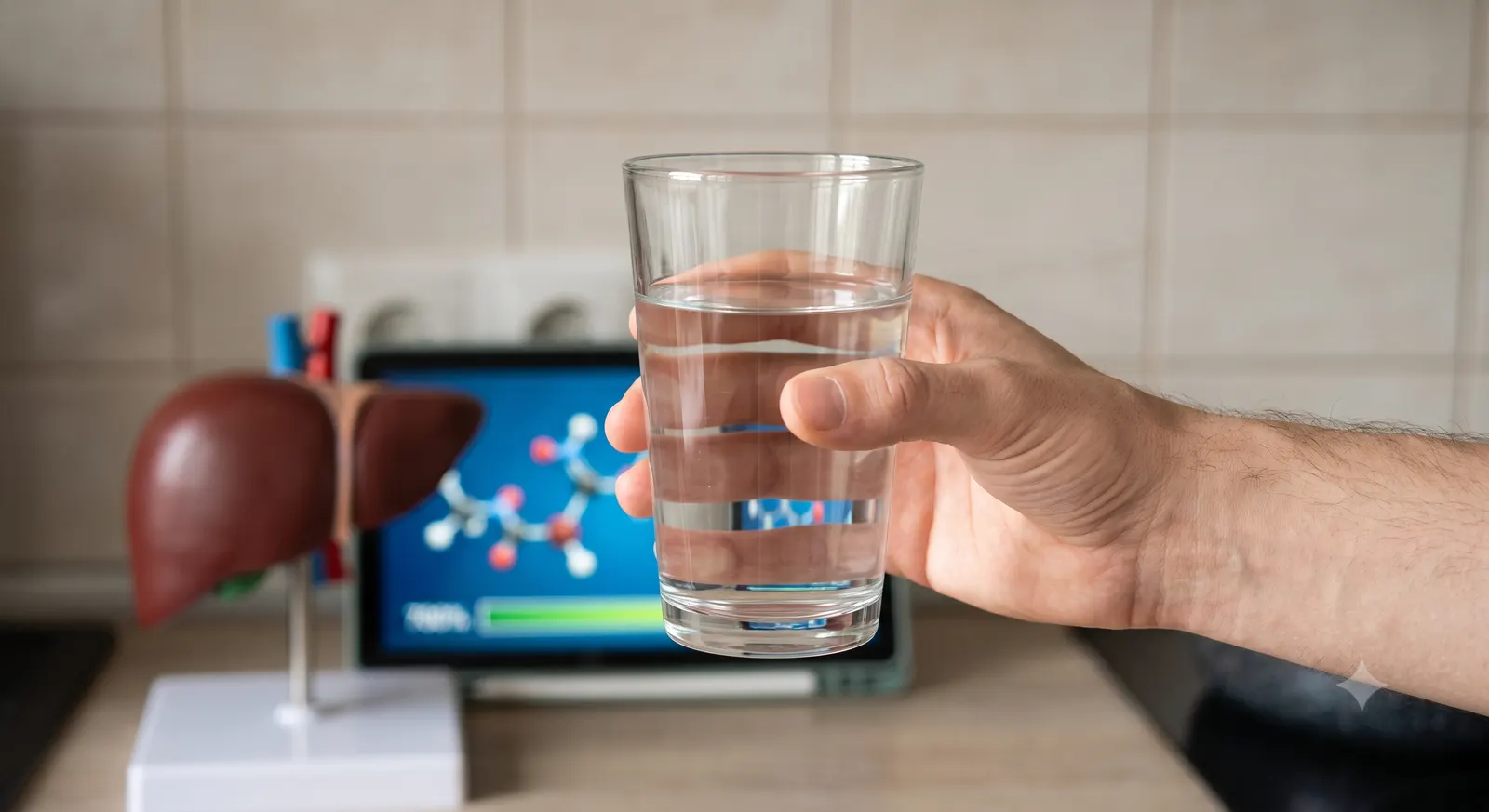
Two things. First, it relieves thirst — reason enough on its own. Second, and more importantly: for most people, drinking water between glasses slows the pace of drinking. Drink less and drink it more slowly, and the estimated blood alcohol level you reach is lower. In other words, the benefit of water comes from taking in less alcohol in the first place, not from flushing alcohol out of the body faster.
In an equation where the only variable is time, water, coffee, a shower or a walk change nothing.
Sources
- Jones AW. Alcohol, its absorption, distribution, metabolism, and excretion in the body and pharmacokinetic calculations. WIREs Forensic Science. 2019;1(5):e1340.
- Jones AW. Evidence-based survey of the elimination rates of ethanol from blood with applications in forensic casework. Forensic Sci Int. 2010;200(1-3):1–20. PMID: 20304569
- Cederbaum AI. Alcohol Metabolism. Clin Liver Dis. 2012;16(4):667–685. PMID: 23101976
- Mackus M, Stock AK, Garssen J, Scholey A, Verster JC. Alcohol hangover versus dehydration revisited: the effect of drinking water to prevent or alleviate the alcohol hangover. Alcohol. 2024;121:9–18. PMID: 39069212
- Imai H, Kushio S, Matsuura K, ve ark. Water intake during drinking does not alleviate hangover symptoms. Front Pharmacol. 2026;17:1852528.
This text and the images were generated with AI and compiled by the site owners.